

 简体中文
简体中文 にほんご
にほんご Deutsch
News Release
Against the backdrop of the continuous expansion of the clean appliance market, the competition in the domestic market is becoming increasingly fierce, and the trend of "internal competition" is intensifying. The industry is generally facing a decline in market growth and profit pressure. At this time, the vast overseas market is becoming an important direction for Chinese brands to break through difficulties and open up new growth opportunities.
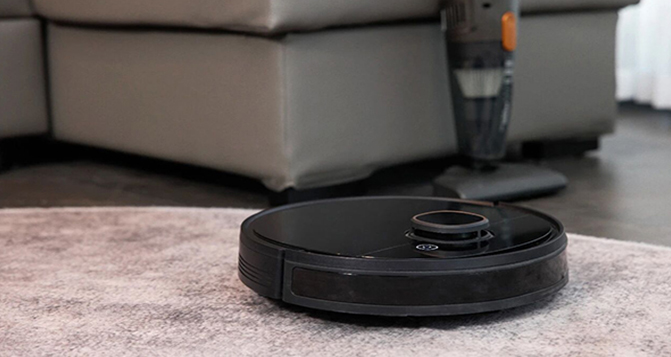
The global clean appliance market is currently maintaining high-speed growth. According to the latest data from NIQ GfK, from January to December 2025, global sales of clean appliances (excluding North America and Russia) reached $27.1 billion, a year-on-year increase of 12.2%. Western Europe, Eastern Europe, the Middle East and Africa, Latin America, developing Asia, and the Russian speaking region all achieved significant growth, with year-on-year increases in retail sales of 13.6%, 15.9%, 17%, 13.2%, 11.4%, and 5.3%, respectively, showing a prosperous trend of synchronous growth in multiple regions.
In this global growth, Chinese brands have become an important driving force. Data shows that the market share of Chinese brands in overseas markets (excluding North America and Russia) has increased significantly from 14% in 2023 to 25% in 2025. This change stems from the concentrated overseas strategy of domestic clean appliance brands in recent years. According to the company's financial report, in the first half of 2025, Ecovacs' overseas revenue accounted for 40.8%, achieving a growth rate of over 86% in both the European and American markets; Stone Technology maintains a leading market share in key overseas markets such as Germany and the United States; As of September 2025, the proportion of overseas revenue of Zhumi Technology has increased from 12% in 2020 to 58%, and plans to exceed 70% in the next three years.
Led by high growth categories such as floor cleaning robots and floor scrubbers, Chinese brands have not only quickly filled the gap in overseas markets, but also gradually become an important force in promoting product upgrades and leading category development. Unlike the past path of relying on cost advantages for household appliances going global, the core driving force for this round of clean appliances going global comes from technological innovation and product value enhancement. In developed markets, the retail pricing of Chinese brands is generally higher than that of domestic brands, presenting stronger profit potential. Taking robotic vacuum cleaners as an example, in the high-end price range of over $800 overseas, Chinese brand sales account for as much as 86%.
Despite the broad prospects, the export of clean appliances still faces many challenges and has entered a "deep water zone" that requires comprehensive response. The standards for safety, energy efficiency, environmental protection, and other aspects in different countries and regions are complex and constantly updated. Enterprises need to invest a lot of resources in product localization testing and certification, and compliance costs continue to rise. At the same time, with the global emphasis on sustainable development, ESG standards have gradually become an important procurement basis for mature markets such as Europe and America, which puts forward systematic requirements for the green and low-carbon transformation of the industrial chain.
There are significant differences in consumption habits, living environment, and channel structure among overseas markets. For example, in key markets such as developed Asia and Western Europe, offline channels still hold an important position, and there is still significant room for Chinese brands to increase their penetration rate in these channels. Therefore, enterprises not only need to continue product and technological innovation, but also need to enhance their insight into the local market, channel construction, and brand communication capabilities, in order to truly adapt to local conditions.
Overall, the export of clean appliances has entered a new stage of comprehensive operational capability competition. From the perspective of overall industry development, only by collaboratively building the international image and reputation of "Made in China" and promoting the overall improvement of the entire industry chain, can Chinese brands achieve stable and far-reaching success in the global market, and make a leap from "product going global" to "brand rooting". This is not a single enterprise fighting alone, but a collective expedition that requires the participation of all links in the industrial chain.